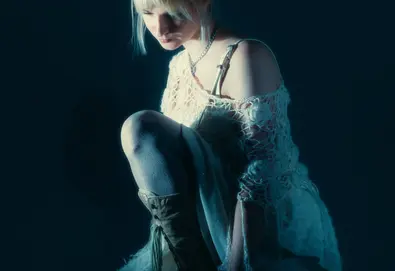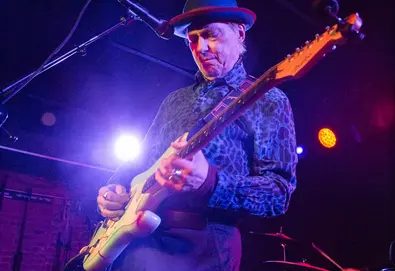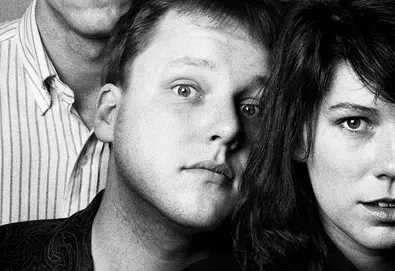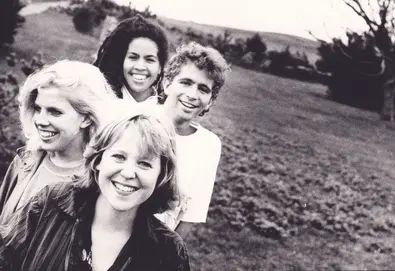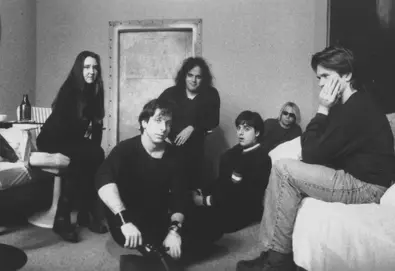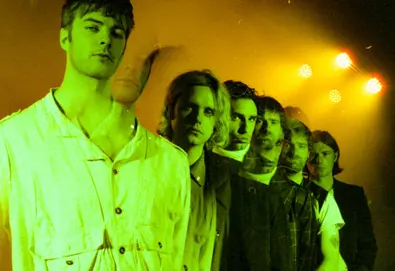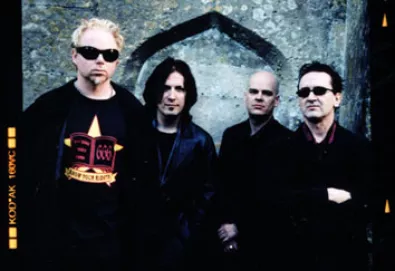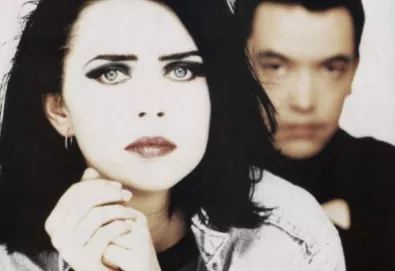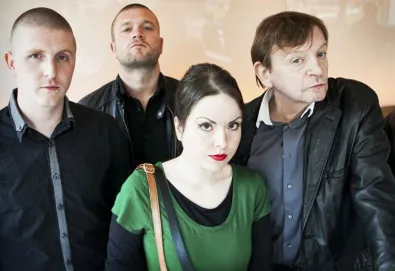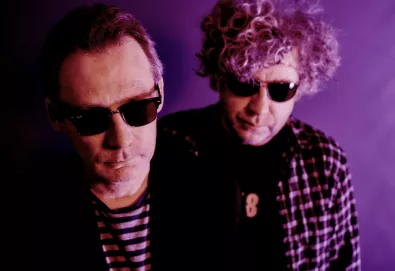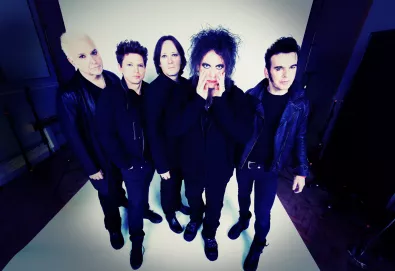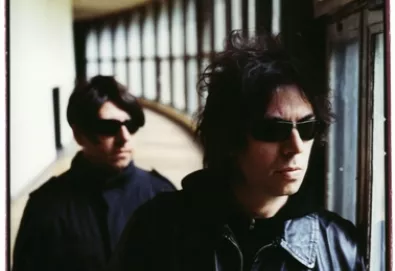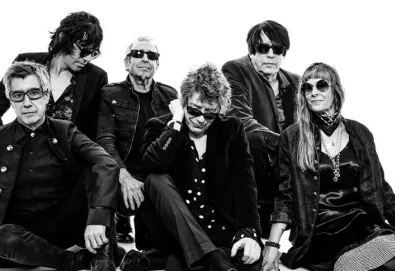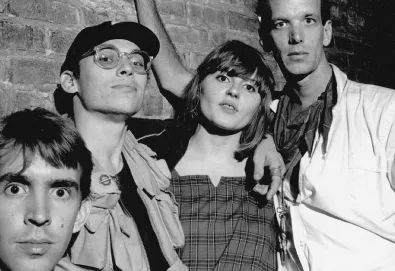
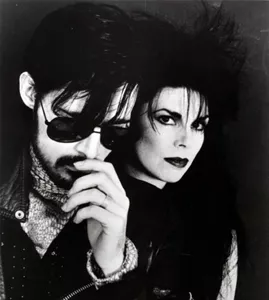
Andrew Eldritch and Gary Marx formed The Sisters of Mercy in 1980 in Leeds, in northern England. The duo’s initial ambition was to hear one of their recordings on the radio. The name came from Leonard Cohen’s song “Sisters of Mercy.” In the years that followed, Eldritch’s deep voice, repetitive bass lines, and the crisp beat of an electronic drum machine gave the band a distinctive sound on the British post-punk scene and made it a staple of gothic rock.
Before moving to Leeds to study Mandarin, Eldritch had studied French and German at Oxford. According to the musician, he was living above a pharmacy in Leeds when he decided to set up a drum kit that someone had stored in the basement. It was as a drummer, alongside Marx on guitar, that he made the group’s first recordings. In 1980, the duo released “The Damage Done” as a single on their own label, Merciful Release, which also included “Watch” and “Home of the Hit-Men.”
With the addition of bassist Craig Adams, Eldritch began focusing on vocals, and the drumming was handled by a drum machine named Doktor Avalanche. The trio made its live debut on February 16, 1981, at Alcuin College, University of York. Later that year, Ben Gunn joined as the second guitarist.
In 1982, the group released “Body Electric,” with “Adrenochrome” on the B-side, and recorded a session for John Peel’s show on the BBC. In November, the single “Alice” was released, featuring “Floorshow” on the other side of the record and produced by John Ashton, guitarist for The Psychedelic Furs. In 1983, the singles “Anaconda” and “Temple of Love” were released, along with the EP The Reptile House. That year, the band also played its first shows in the United States. Ben Gunn left the group after their tour of the East Coast.
In 1984, Wayne Hussey, former guitarist for Dead or Alive, took over for Gunn. The band signed a deal with WEA and released the singles “Body and Soul” and “Walk Away.” Their debut album, First and Last and Always, came out in 1985. Marx and Hussey’s guitars shared equal prominence in both the arrangements and the compositions, with lyrics by Eldritch. The lineup broke up later that year: Marx left during the tour, and Hussey and Adams went on to form The Mission.
In 1986, Eldritch released Gift under the name The Sisterhood. The following year, he revived The Sisters of Mercy with Floodland. Bassist Patricia Morrison, a former member of The Gun Club, appeared alongside him on the album cover. Keyboards and backing vocals took center stage on tracks like “This Corrosion,” while “1959” relied solely on vocals and piano. “This Corrosion” reached number seven on the UK singles chart. In 1988, “Dominion” and “Lucretia My Reflection” were also released as singles. On the album, “Dominion” is part of the opening track, “Dominion/Mother Russia.”
On Vision Thing (1990), the guitars returned to the forefront, with hard rock-style riffs on tracks like “More” and “Doctor Jeep.” The lineup during this phase included Eldritch, guitarists Andreas Bruhn and Tim Bricheno, bassist Tony James, and Doktor Avalanche. In October of that year, the group performed in Brazil, with shows in Brasília, São Paulo, and Rio de Janeiro.
The 1992 compilation Some Girls Wander by Mistake brought together recordings from their independent phase. In 1993, A Slight Case of Overbombing covered the next phase and included the single “Under the Gun.” In 1997, Eldritch contributed to Go Figure, an electronic music album by the SSV project that remained officially unreleased. The Sisters of Mercy’s journey continued on stage, where the band also began performing new songs. In 2026, 46 years after their formation, the group was still touring.
- Origin: