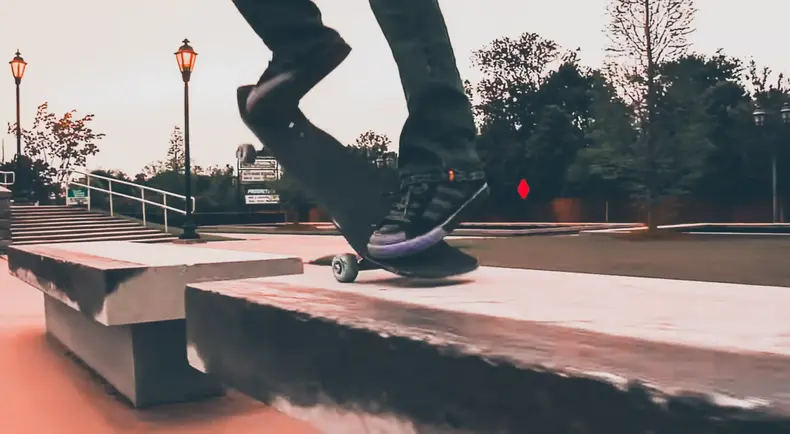
Historically, modern skateboarding emerged in California, in the United States, between the late 1940s and early 1950s, when surfers began attaching roller skate wheels to wooden boards to simulate surfing movements on the streets when ocean conditions were poor. This practice was initially known as sidewalk surfing—in Portuguese, “surfe de calçada.”
As skateboarding became popular as a sport in the 1960s, its connection with youth music began. The first song to celebrate the new sport was “Sidewalk Surfin’,” by the duo Jan & Dean, an adaptation of “Catch a Wave” by the Beach Boys. While the original is about surfing, “Sidewalk Surfin’” is themed around “sidewalk surfing.”
By the late 1970s and early 1980s, having moved away from the surf aesthetic and adopted a rebellious identity centered on occupying and adapting urban spaces—such as streets, squares, and vacant lots— skateboarding became associated with the aggressive aesthetic of the punk rock and New Wave scenes.
In the 1980s, the main bands with strong ties to skateboarding were part of the skate punk and hardcore movements. Bands such as Black Flag, Adolescents, Agent Orange, JFA (Jodie Foster’s Army), Big Boys, Circle Jerks, and Suicidal Tendencies helped create part of the soundtrack of street culture.
In the following decade, Bad Religion, NOFX, Pennywise, Lagwagon, The Offspring, and Rancid were the main musical influences for skateboarders. The movement also embraced a diversity that incorporated genres such as ska, hip-hop, metal, reggae, alternative rock, and electronic music. It was also in the 1990s that the video game Tony Hawk’s Pro Skater brought the connection between music and skateboarding to the general public.
Below, we’ve compiled our favorite videos that feature skateboarding as a powerful symbol of youth and urban culture.